
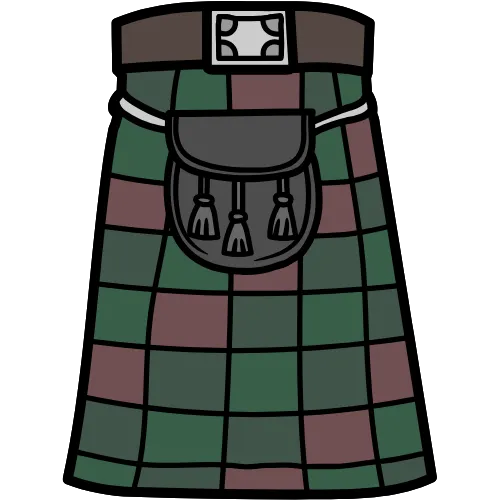
Kilt Size Calculator
Other Calculators

The first time I tried on a kilt, I honestly thought it would be easy. I assumed it would fit like a normal skirt, just with pleats and tradition added in.
I grabbed what looked like my usual waist size, wrapped it around myself, and stepped in front of the mirror, feeling quite proud already.
Five minutes later, I was confused, uncomfortable, and slightly panicked.
The waistband was sitting too low. The pleats were pulling in weird directions. The fabric felt too tight in one place and too loose in another.
I looked nothing like the elegant, confident image I had in my head. I didn’t look like a man wearing a proud piece of Scottish heritage. I looked like someone wearing the wrong size costume.
That awkward moment taught me something important: a kilt is not just clothing — it’s craftsmanship.
And craftsmanship only looks good when the size is right.
That’s exactly why a Kilt Size Calculator is not a gimmick. It’s a genuinely useful tool for anyone who wants their kilt to look dignified, balanced, and comfortable instead of sloppy and awkward.
Why Kilt Sizing Is Completely Different From Trouser Sizing
One of the biggest mistakes beginners make is assuming that kilt size works the same way as trouser size. It doesn’t.
Trousers sit on your hips. A traditional kilt sits much higher, around your natural waist, closer to your belly button.
This alone changes everything. If you measure your hips instead of your waist, your kilt will almost always be too loose.
Then there’s the length. Kilt length is not about fashion preference. It’s about proportion and tradition.
A properly sized kilt should fall right at the middle of your kneecap. Any shorter and it starts looking like a mini skirt. Any longer and it looks heavy and unbalanced.
And then there’s the rise, the pleats, the apron overlap, and the way the fabric drapes around your body. None of this behaves like modern trousers.
This is why people who “know their pant size” still end up ordering the wrong kilt size.
Our Kilt Size Calculator exists specifically to translate modern body measurements into traditional kilt proportions.
My Embarrassing First Kilt Experience
Let me tell you how badly I messed this up the first time.
I ordered a kilt online for a cultural event. I used my jeans’ waist size, ignored the height guide, and thought, “How different can it really be?”
Very different, apparently.
When it arrived, the waistband sat awkwardly low, almost on my hips. The length went way past my knees and brushed my calves.
The pleats didn’t flare properly when I walked, and the whole thing felt heavy and restrictive.
I tried to fix it by tightening the straps. That only made the fabric bunch up weirdly at the sides. In photos, it looked like I had borrowed someone else’s kilt.
That experience taught me never to guess again. From that day onward, I started measuring properly and using a Kilt Size Calculator instead of trusting my memory or old clothing labels.
Why “Close Enough” Is Not Good Enough With Kilts
With most casual clothes, being slightly off in size is usually fine. With kilts, it really isn’t.
If your kilt is too loose, it slips down and ruins the posture of the entire outfit. You start adjusting it constantly, which looks awkward and feels distracting.
If it’s too tight, the apron doesn’t overlap properly. The pleats pull apart when you sit.
The waistband digs into your stomach. You stop enjoying the event because you’re too busy worrying about your clothes.
A properly sized kilt, on the other hand, feels surprisingly secure and comfortable.
It sits exactly where it should, stays in place when you move, and lets the pleats flow naturally when you walk.
That perfect balance is not something you get from guessing. It comes from proper measurements, and that’s exactly what a Kilt Size Calculator is designed to support.
What Kilt Size Actually Means in Real Life
When people hear “kilt size,” they usually think it’s just waist size and length. In reality, it’s a little more detailed than that.
Your kilt size depends on where your natural waist actually sits, not where your jeans sit.
It also depends on your total height, because that affects how long the kilt should be to fall correctly at the kneecap.
It also depends on your body shape. Someone with a flat stomach will wear a kilt differently than someone with a rounder midsection.
The apron overlap, strap positioning, and pleat spread all change slightly based on your build.
This is why two men with the same waist size can still need slightly different kilt sizes.
A good Kilt Size Calculator takes this into account instead of oversimplifying everything into one number.
How I Measure Myself Now Before Ordering a Kilt
After my first disaster, I finally learned how to measure properly.
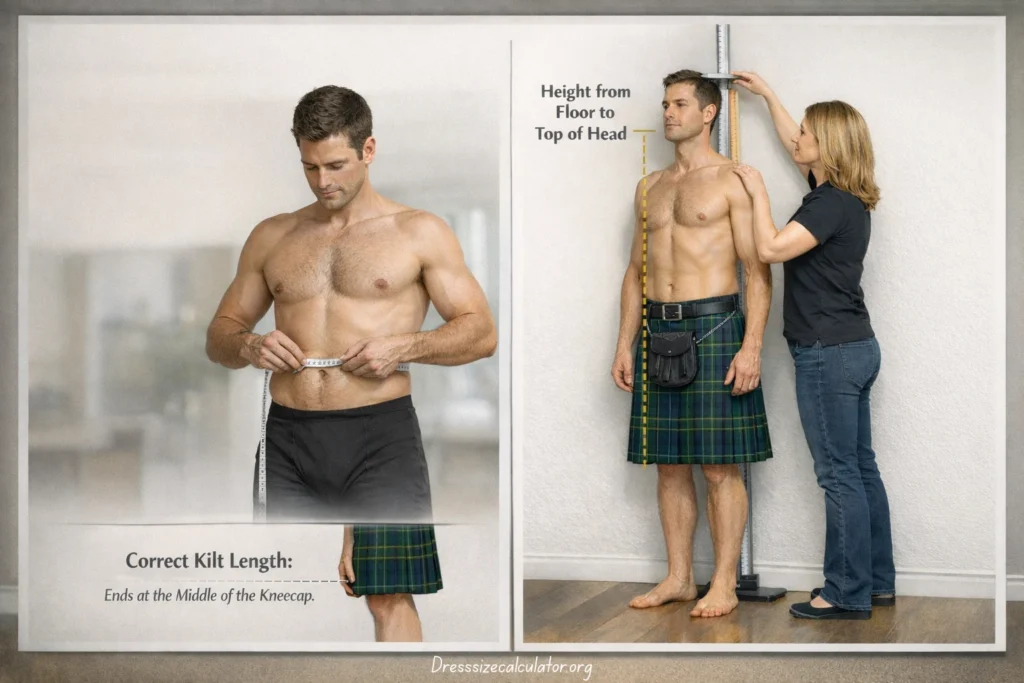
I stand up straight and find my natural waist, which is usually just above the belly button.
I wrap a measuring tape around that point, keeping it snug but not tight. That number is my real kilt waist size.
Then I measure my height properly, barefoot, from the floor to the top of my head.
This helps determine the correct kilt length so it ends at the middle of my kneecap.
When I plug these two numbers into a Kilt Size Calculator, the recommended size almost always matches what a professional kilt maker would suggest.
And honestly, it saves me from a lot of stress and expensive tailoring mistakes.
Why Kilt Sizes Vary So Much Between Brands
Here’s another thing nobody warns you about: kilt sizing is not standardised across all brands.
Some makers cut their kilts slightly longer. Some prefer a higher rise. Some use a thicker fabric that changes how the kilt drapes on your body.
Some designs for modern casual wear, while others stick closely to traditional military or formal proportions.
That’s why someone can wear a size 34 in one brand and a size 36 in another and still feel comfortable in both.
A calculator-based approach helps you focus on your body measurements first, not just brand labels.
It gives you a stable reference point that stays consistent even when brand sizing changes.
The Confidence Factor Nobody Talks About
Here’s something people rarely mention: a well-fitted kilt changes how you carry yourself.
When your kilt fits properly, you stand straighter. You walk more confidently. You stop adjusting your clothes every two minutes. You actually feel proud wearing it instead of self-conscious.
I’ve noticed this difference very clearly at weddings and cultural events.
The men who look the best in kilts are not always the tallest or the fittest. They’re the ones whose kilts fit properly.
That’s why I always say that a Kilt Size Calculator is not just a sizing tool. It’s a confidence tool.
Final Thoughts – Respect the Garment, Respect the Fit
A kilt is not just another outfit. It’s a piece of heritage, craftsmanship, and identity. It deserves to be worn properly.
If you’ve never worn a kilt before or if you’ve had a bad sizing experience in the past, don’t rely on guesswork again.
Take two minutes to measure yourself properly and use a Kilt Size Calculator to guide your choice.
It can save you money, embarrassment, and a lot of unnecessary discomfort.
And more importantly, it helps you wear your kilt the way it was meant to be worn: with pride, confidence, and perfect balance.
Disclaimer: Please note that the sizes provided by our Kilt Size Calculator may not perfectly match the sizing conventions of all clothing stores and brands.
Sizes can vary between manufacturers and collections, so we recommend using this tool as a guide and checking the specific size charts of the store or brand you are purchasing from for the most accurate fit.